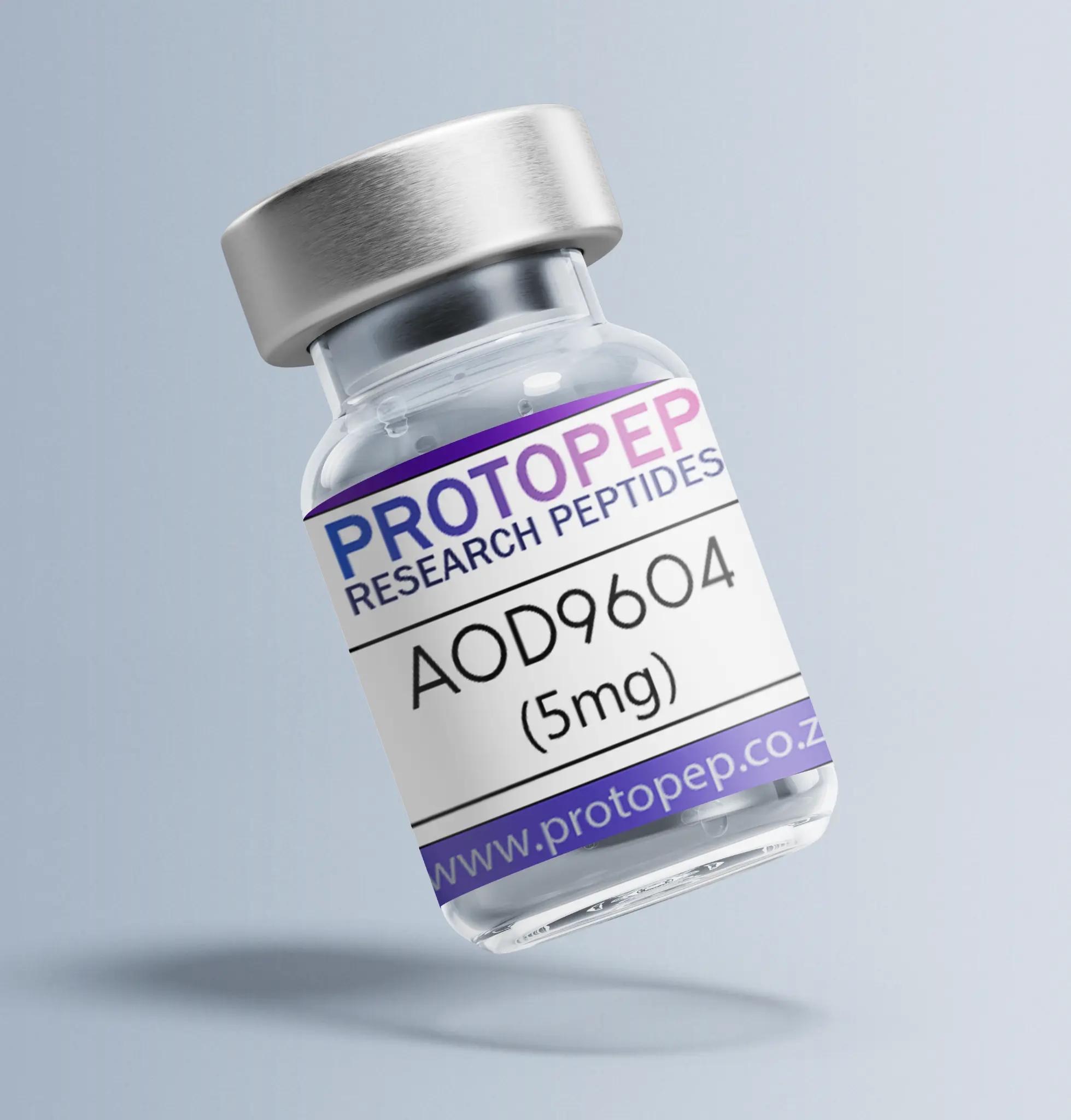
AOD 9604
Modified HGH fragment for fat loss
AOD 9604 is a synthetic, modified peptide fragment derived from the C-terminus of the human growth hormone (HGH) molecule. Specifically, it represents the amino acid sequence 176-191. This compound is engineered to isolate the metabolic functions of HGH while excluding the proliferative and growth-promoting effects associated with the full hormone.
- •Targeted stimulation of adipose tissue breakdown (lipolysis).
- •Inhibition of new fat cell formation (lipogenesis).
- •Absence of systemic growth-promoting effects common to full HGH.
- •Potential for research into localized fat reduction strategies.
- •Valuable tool for studying targeted metabolic pathways.
- •High stability and specific receptor binding affinity.
AOD 9604 functions by mimicking the action of HGH on fat metabolism. It is believed to bind selectively to the $\beta-3$ adrenergic receptors, which are highly expressed on adipose tissue. This binding initiates a cascade leading to the phosphorylation of Hormone-Sensitive Lipase (HSL) and Adipose Triglyceride Lipase (ATGL), the primary enzymes responsible for hydrolyzing stored triglycerides into free fatty acids and glycerol. Crucially, AOD 9604 does not interact significantly with the GHR receptor (Growth Hormone Receptor), explaining its lack of effect on insulin-like growth factor 1 (IGF-1) levels, glucose homeostasis, or cell proliferation. Its primary mechanism is the direct mobilization of fatty acids from adipocytes, coupled with the suppression of enzymes necessary for lipid synthesis and storage.
The unique metabolic specificity of AOD 9604 makes it a critical tool in obesity and metabolic syndrome research. Scientists utilize this peptide to investigate targeted pharmacological interventions aimed at reducing visceral and subcutaneous fat stores without altering systemic growth parameters or insulin sensitivity. Furthermore, AOD 9604 is employed in studies examining the fundamental regulatory mechanisms of lipid homeostasis. Its use allows researchers to isolate the lipolytic pathway from the broader endocrine effects of HGH, providing clearer insights into the molecular controls governing adipose tissue mass and body composition changes under various experimental conditions.
Based on research applications and synergistic mechanisms, this peptide is frequently combined with:
No reviews yet. Be the first to review AOD 9604!
Have a question about AOD 9604? Ask here and get answers from our team or other researchers.
No questions yet. Be the first to ask about AOD 9604!
Research Use Only
This product is sold strictly for research purposes only. It is not approved by the FDA for human consumption or medical use. Intended for laboratory and research applications by qualified researchers and institutions only.